
Employers and recruiters from Ghana and Nigeria exchange practices to advance fair recruitment
Posted at November 17th 2026 12:00 AM | Updated as of November 17th 2026 12:00 AM
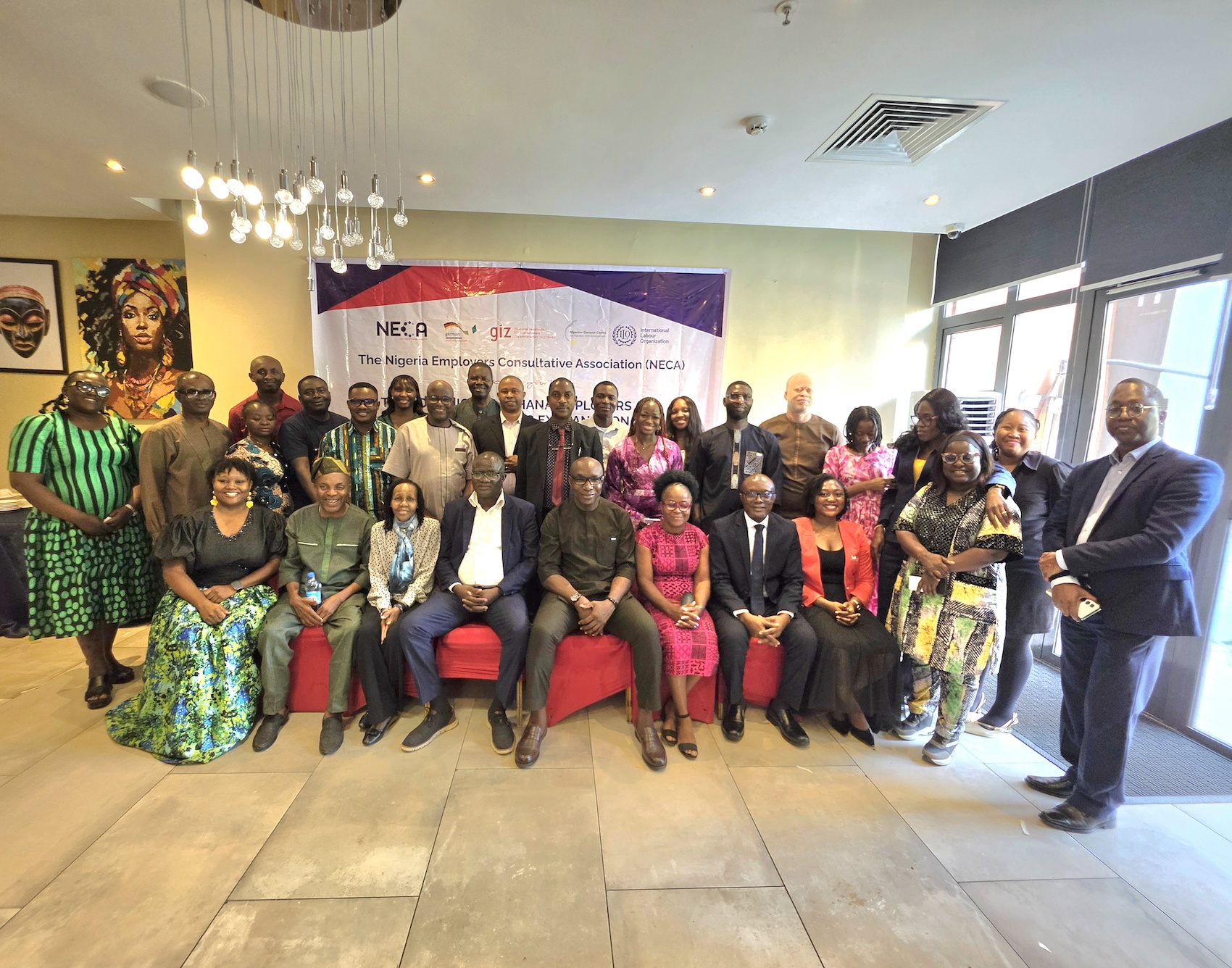
An ILO-supported workshop in Lagos brought together employers and recruitment agencies from Nigeria and Ghana to explore practical approaches to fair recruitment, worker protection and regional labour mobility.
LAGOS, Nigeria (ILO News) – Employers, employers’ organizations and private employment agencies from Ghana and Nigeria gathered in Lagos on 11–12 November 2026 to share experiences and strengthen their capacity to apply fair recruitment principles.
Organized by the Nigeria Employers’ Consultative Association (NECA), with support from the ILO, the workshop “From policy to practice: strengthening employers’ capacity to effectively engage on labour migration governance” connected policy dialogue with practical action throughout the recruitment and employment cycle.
Discussions addressed employer–recruiter relationships, recruitment risks, transparent employment conditions and the protection of migrant workers. Case studies and peer exchanges provided opportunities to examine challenges and identify approaches that could be adapted to national contexts.
The exchange also provided an opportunity to strengthen cooperation between employers’ organizations and recruitment actors in Nigeria and Ghana.
Participants underscored the importance of improving access to accurate migration information and raising awareness of fair recruitment practices among employers and recruiters as well as prospective migrant workers. Particular attention was given to pre-departure information, recruitment fees and related costs, and the need to strengthen mechanisms through which workers can identify abusive recruitment practices and seek appropriate assistance.
A highlight was the session “Regional Good Practice Exchange: Recruiter-led Fair Recruitment Practices”, presented by Margaret Wanjiru Mugwanja, a recruiter who contributed to the development of an International Training Centre of the ILO (ITCILO) global learning tool for recruiters. She introduced the tool and shared examples of promising practices from recruiters across regions, illustrating how recruitment agencies can translate fair recruitment principles into their day-to-day operations.
The session “Responsible Labour Mobility within the ECOWAS Framework: Implications for Employers and Recruiters” examined the role of employers and recruiters in supporting labour mobility within the Economic Community of West African States. It also presented initiatives elsewhere in Africa, including the Indian Ocean and East and Horn Africa, to organize employers and recruitment agencies, including through the establishment of federation and the development of regional codes of conduct. These experiences provided a basis for discussing how collective action can strengthen professional standards, accountability and cross-border cooperation.
A dedicated session on digitalization drew on experiences from Bangladesh, Nigeria and Ghana to explore how digital licensing systems can support transparency and regulatory oversight, while emphasizing data protection, accessibility and migrant workers’ rights.
The programme also included collaborative work on an Employer Fair Recruitment and Responsible Labour Mobility Checklist, designed to help employers identify recruitment risks, undertake due diligence and support worker protection.
The exchange strengthened dialogue and cooperation between employers’ organizations and recruitment actors in Nigeria and Ghana. Drawing on experiences from both countries, participants identified common challenges relating to recruitment practices, regulatory compliance and cross-border labour mobility, and highlighted the need for greater coherence in labour migration policies and procedures. Discussions also explored opportunities for continued institutional collaboration, knowledge sharing and practical measures to strengthen fair recruitment and migrant worker protection within the ECOWAS region.
By connecting global learning resources, African experiences and Nigeria–Ghana peer exchange, the workshop supported practical dialogue on how employers and recruiters can contribute to fair recruitment and decent work for migrant workers., the workshop strengthened dialogue and cooperation between employers’ organizations and recruitment actors in both countries. Participants identified common challenges relating to recruitment practices, regulatory compliance and cross-border labour mobility, while exploring opportunities for greater policy coherence, continued collaboration and practical action to advance fair recruitment, decent work and the protection of migrant workers within the ECOWAS region.
This workshop was organised by the ACTION project, with punctual support of the Fair Recruitment Forward project for targeted sessions. Both projects are funded by the Deutsche Gesellschaft für Internationale Zusammenarbeit (GIZ).