

National Stakeholders Set the Course for Tanzania’s Labour Migration Future in Dodoma
Posted at February 26th 2026 12:00 AM | Updated as of February 26th 2026 12:00 AM
Region/Country : United Republic of Tanzania
|
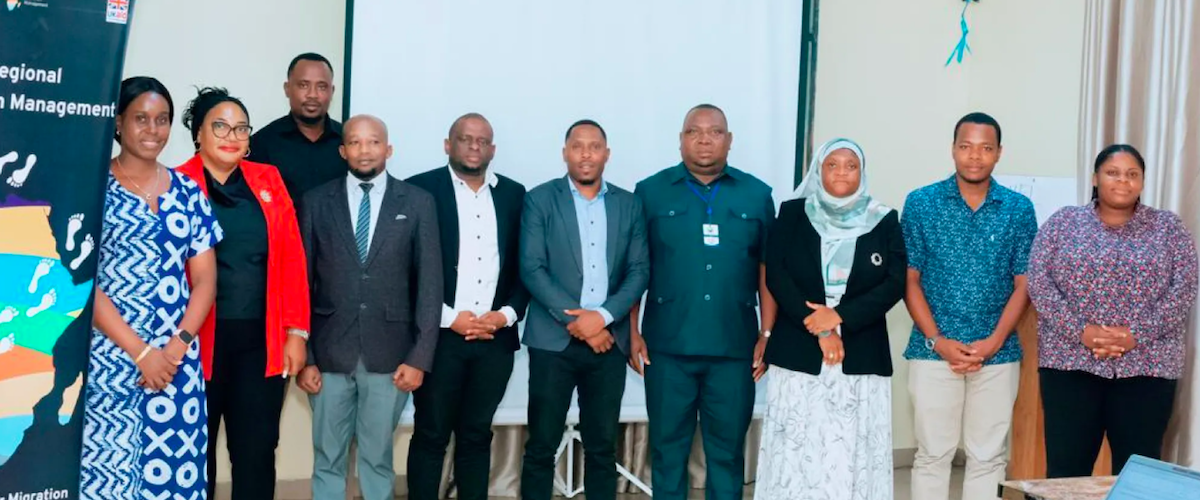
Fifth National Technical Working Group (TWG) meeting on Labour Migration in Dodoma, Tanzania to review progress, address implementation challenges, and promote the programme’s exit strategy for long-term impact.
On 19 January 2026, the Prime Minister’s Office- Labour, Employment and Relations (PMO-LER)in collaboration with the International Labour Organization (ILO), convened the Fifth National Technical Working Group (TWG) meeting on Labour Migration in Dodoma. Organised under the Better Regional Migration Management (BRMM) Programme, funded by the UKFCDO, and hosted by the PMO-LER, the meeting brought together 10 (4 Female) representatives from the tripartite plus institutions, including the Prime Minister’s Office, Labour, Employment and Relations, the Ministry of Home Affairs, the Ministry of Gender, Tanzania Recruitment Agencies Association, Association of Tanzania Employers to review progress, address implementation challenges, and promote the programme’s exit strategy for long-term impact.
The TWG mechanism, established in January 2023, has played a vital role in coordinating national efforts on labour migration governance. This fifth and final TWG gathering served as a strategic reflection point, bringing to the fore Tanzania’s achievements over the past three years under BRMM Phase II, while creating space for stakeholders to agree on sustainability priorities as the project nears its completion. The gathering focused on consolidating results, charting new directions, and preparing for the regional dialogue, the Labour Migration Advisory Group (LMAG), which took place 21-23 January 2026.
The 5th TWG meeting highlighted Tanzania’s significant achievements in advancing labour migration governance. The country strengthened its labour migration statistics through the development of an alternative sampling strategy, delivery of technical training aligned with the 19th and 20th ICLS guidelines, and integration of migration modules into the 2024 Labour Force Survey, with findings published in November 2025 to inform evidence-based policymaking.
Progress was also made in skills development, including validation of a gap analysis on domestic worker training, finalisation of a standardised Pre-Departure Orientation manual, and development of a national competency-based curriculum for domestic workers. Plans are underway to launch a Migrant Resource Centre under the Trade Union Congress of Tanzania (TUCTA) to expand access to legal aid, reintegration services, and pre-departure support.
Tanzania further advanced stakeholder engagement through active involvement of tripartite partners, including TUCTA and the Association of Tanzanian Employers. Union-to-union cooperation, regional knowledge exchange, and national advocacy. A study assessing recruitment agency regulation was validated in November 2025. Other achievements include the development of an information kit for non-Omani workers, and the development and validation of a communication strategy and action plan on safe migration, as well as training of 40 private recruitment agencies on fair recruitment and newly launched guidelines on Private Employment Agencies, which took place on 17-18 February 2026.
Participants proposed a series of measures to embed project results, including establishing an inter-ministerial labour migration unit, mainstreaming migration into the revised employment policy, and securing national funding for continued training and data collection.