
Senegal launches the development of its national labour migration strategy
Posted at July 5th 2026 12:00 AM | Updated as of July 5th 2026 12:00 AM
Region/Country : Senegal
|Themes : Labour migration governance
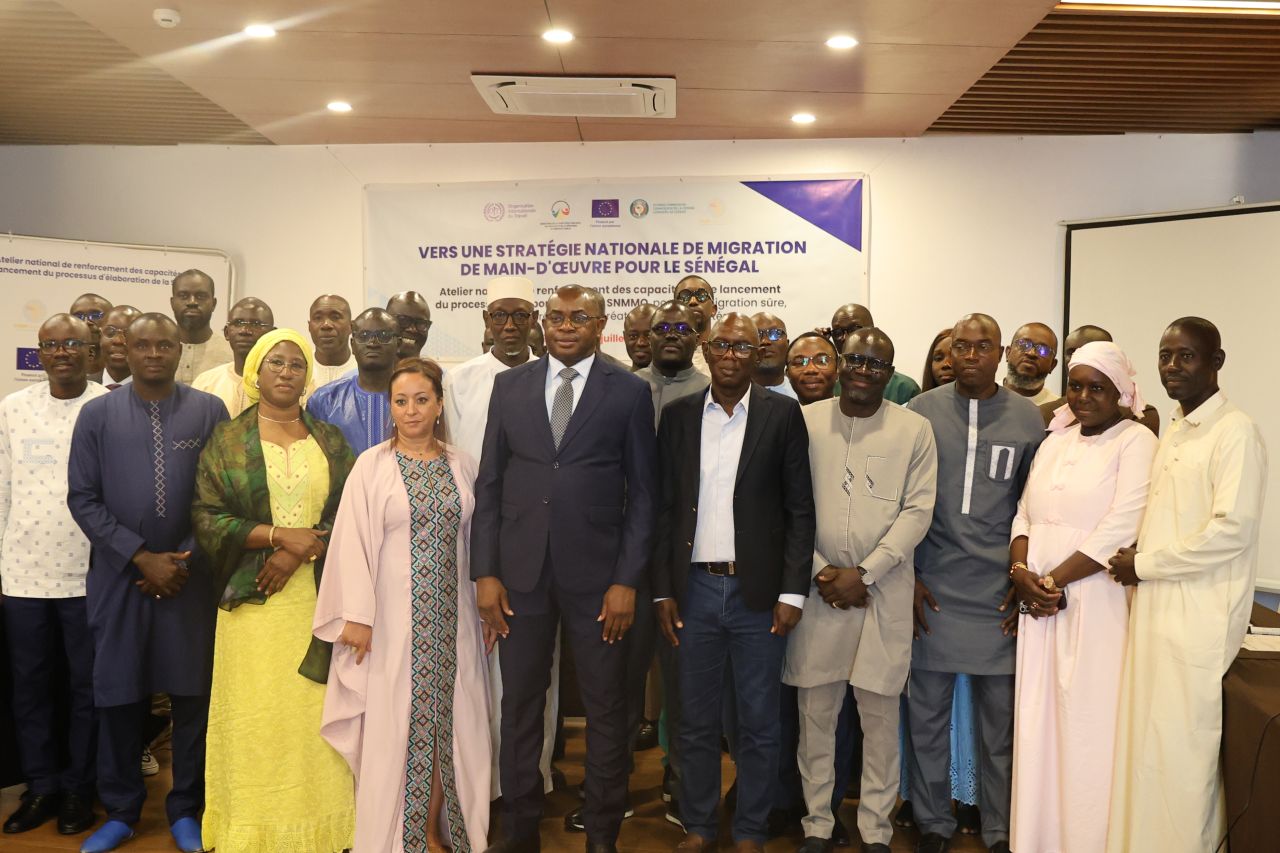
Dakar, Senegal (June 29 – July 1, 2026) – The Government of Senegal has officially launched the process of developing its National Labour Migration Strategy (SNMMO), marking a significant milestone in strengthening labour migration governance in the country. This initiative is led by the Ministry of Civil Service, Labour, and Public Service Reform, with the support of the International Labour Organization (ILO), the European Union (EU), and ECOWAS, under the EU-funded "Free Movement of Persons and Migration in West Africa" (FMM West Africa II) programme.
The launch workshop, held in Dakar from June 29 to July 1, 2026, and presided over by Mr. Mamadou Lamine Diante, Minister of Civil Service, Labour, and Public Service Reform, brought together over fifty participants. Attendees included representatives from public agencies responsible for labour, employment, migration, and social protection, as well as social partners, civil society organizations, and technical and financial partners.
Over the course of three days, participants deepened their understanding of the issues surrounding labour migration within a constantly evolving economic, political, and social context. The discussions fostered a shared understanding of the challenges and opportunities associated with labour mobility, validated the methodology for developing the national strategy, allowed for the sharing of preliminary assessment results, and enabled an examination of international experiences to help define Senegal's strategic priorities.
The development of this strategy aligns with Senegal's international and regional commitments regarding migration governance. It contributes notably to the implementation of the Global Compact for Safe, Orderly and Regular Migration and the African Union’s guidelines, as well as to the operationalization of the ECOWAS Labour Migration Strategy 2025–2030, which was adopted to promote labour mobility that is better governed, rights-based, and conducive to development.
The process is supported by the FMM West Africa II program, funded by the European Union and implemented by a consortium comprising the ILO, the International Organization for Migration (IOM), the International Centre for Migration Policy Development (ICMPD), and ECOWAS. The program aims to strengthen migration and free movement governance in West Africa, promote regular migration pathways, and better protect the rights of migrant workers.