

Ghana Advances Fair Recruitment Agenda with the Validation of two Key Reports
Posted at December 11th 2025 12:00 AM | Updated as of December 11th 2025 12:00 AM
Region/Country : Ghana
|Temas : Fair recruitment, Migrant workers, Gender equality
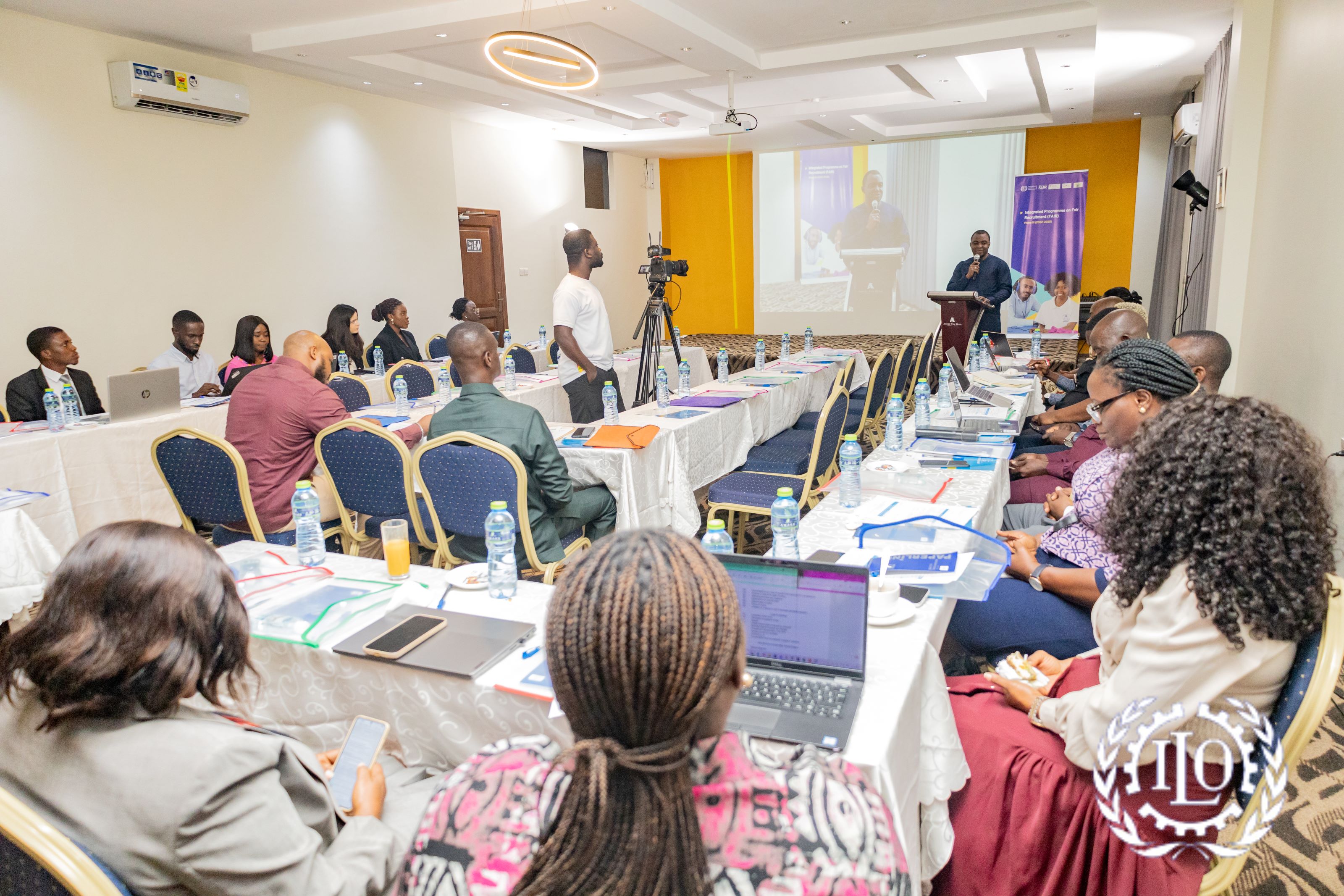
On 4 December 2025, the ILO organized a workshop to validate two major reports and convene the Project Advisory Board (PAB) meeting in Accra as part of the ongoing efforts of the Integrated Programme on Fair Recruitment - Phase III (FAIR III) to strengthen fair recruitment and migrant worker protection in Ghana. During this meeting, government institutions, workers’ and employers’ organizations, civil society actors, international partners, and technical experts reviewed key findings on gender inequalities in recruitment and access to justice for migrant workers.
Supported by the Swiss Agency for Development and Cooperation (SDC) and the German Development Cooperation (GIZ), the FAIR III Programme is promoting fair, transparent, and rights-based recruitment. In Ghana, the programme focuses on the Ghana–Gulf Cooperation Council (GCC) migration corridor and works to align national policies with international labour standards, strengthen institutional capacities, and ensure that migrant workers can access protection and redress throughout the migration cycle.
A central purpose of the workshop was to validate two newly completed studies commissioned by the ILO and the Ministry of Employment and Labour Relations. The first assesses gender inequalities in recruitment and migration processes along the Ghana–Nigeria corridor and to the Arab States, with particular attention to sectors in which women are concentrated, including domestic work, healthcare, and agriculture. The second maps the grievance and redress mechanisms available to migrant workers in Ghana and returning migrants, analysing the legal and institutional landscape and the practical barriers that impede access to justice, especially for women. During the sessions, participants reviewed the methodology, key findings, and draft recommendations of both studies.
The event also served as an opportunity to reflect on broader programme progress. Throughout 2025, FAIR III implemented a range of activities in Ghana, including the development of a roadmap for integrated labour migration statistics, regional training for Diaspora Desk and Consular Officers, the design of a digital system for monitoring Private Employment Agencies, institutional capacity-building for labour officials, the adaptation of the ILO Media Toolkit on Forced Labour and Fair Recruitment for ECOWAS, and financial education training for migrant workers and key stakeholders.
The PAB reviewed the programme’s overall trajectory, members underscored the importance of embedding fair recruitment principles within national systems and maintaining close collaboration among government entities, social partners, media, civil society organizations, lawyers and development partners. The workshop concluded with a shared commitment to consolidate achievements, operationalize the validated recommendations, and continue advancing fair recruitment and decent work for all migrant workers in Ghana.