Private Employment Agencies formalize regional cooperation on fair recruitment in East and Horn of Africa
Posted at September 10th 2026 12:00 AM | Updated as of September 10th 2026 12:00 AM
Region/Country :
|Themes : ,
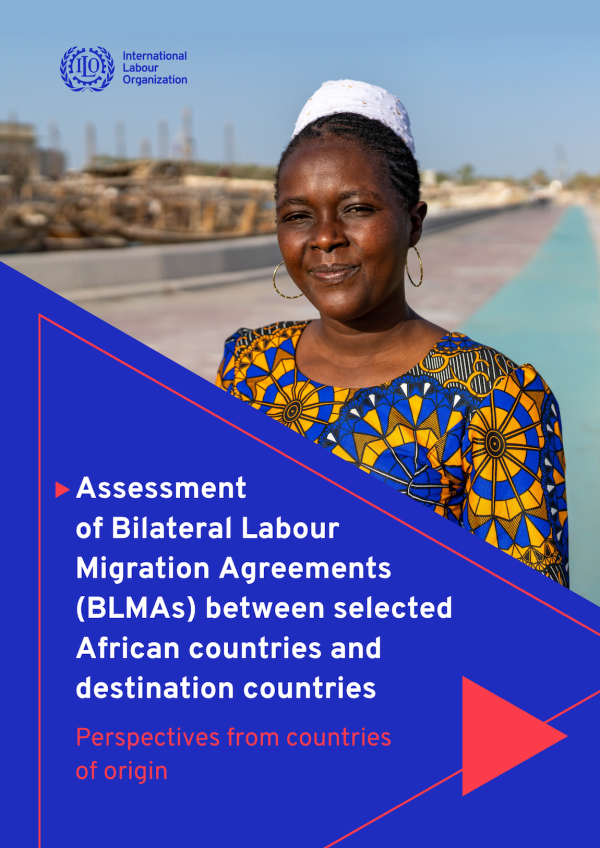
Assessment of Bilateral Labour Migration Agreements (BLMAs) between selected African countries and destination countries
This report examines Bilateral Labour Migration Agreements (BLMAs) involving seven African countries of origin (Côte d’Ivoire, Ethiopia, Ghana, Kenya, Nigeria, Tanzania and Uganda) with destination countries in the Gulf Cooperation Council (GCC), Jordan and Lebanon, as well as selected European countries for comparative purposes. It reviews signed agreements, draft texts and ongoing negotiation processes where documentation was available, using desk review, agreement mapping and targeted key informant interviews. The analysis applies the core dimensions of the ILO-IOM BLMA Joint Assessment Tool, covering preparation and negotiation, substantive content, implementation, and monitoring and follow-up.
The report identifies key challenges and opportunities to strengthen BLMA governance, including gaps between agreement provisions and implementation in practice, the need for stronger monitoring and worker awareness, and opportunities for more systematic involvement of workers’ and employers’ organisations throughout the BLMA lifecycle. It also explores how greater coordination among African countries of origin, including through Regional Economic Communities such as IGAD, the EAC and ECOWAS, could support common minimum standards and peer learning. The findings are intended to inform policy dialogue, ILO technical assistance and future programming to promote fair, safe and regular labour migration pathways.
This publication was made possible through the support of several ILO labour migration programmes, including FAIRWAY II, funded by the Swiss Agency for Development and Cooperation (SDC); FMM West Africa II, funded by the European Union (EU); the Action for Improving Labour Migration Governance in Nigeria (ACTION) Project, funded by the Deutsche Gesellschaft für Internationale Zusammenarbeit (GIZ) under its Centres for Migration and Development (ZME) Programme; and the Better Regional Migration Management (BRMM) Programme, Phase II, funded by the United Kingdom Foreign, Commonwealth and Development Office (UK-FCDO).
Type of document :
Country/Region : ,
Year of publication :
Theme : , ,
African Migrant Resource Centres strengthen cooperation to support migrant workers
Posted at May 25th 2026 12:00 AM | Updated as of May 25th 2026 12:00 AM
Region/Country :
|Themes : ,
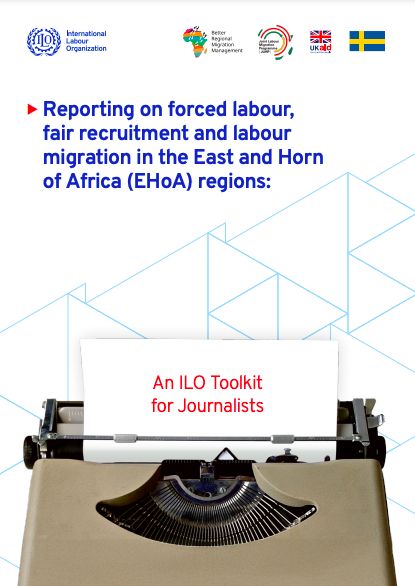
Reporting on forced labour, fair recruitment and labour migration in the East and Horn of Africa (EHoA) regions: An ILO Toolkit for Journalists
The report is a practical media toolkit developed by the ILO to strengthen accurate and responsible reporting on forced labour, fair recruitment, and labour migration in the East and Horn of Africa. It highlights the critical role of journalists in exposing labour abuses, promoting public discourse, and influencing policy, while emphasizing ethical reporting that avoids sensationalism or harm to affected populations. The publication provides guidance on understanding the complexities of labour migration systems, including global supply chains and governance gaps, and offers tools, examples, and key questions to help media professionals investigate, verify, and report stories effectively, ultimately contributing to improved worker protection and informed public debate.Faceb
Type of document :
Country/Region :
Year of publication :
Theme : , ,
West Africa moves towards a common approach on bilateral labour migration agreements and fair recruitment of migrant workers
Posted at July 9th 2026 12:00 AM | Updated as of July 9th 2026 12:00 AM
Region/Country : ,
|Themes : ,
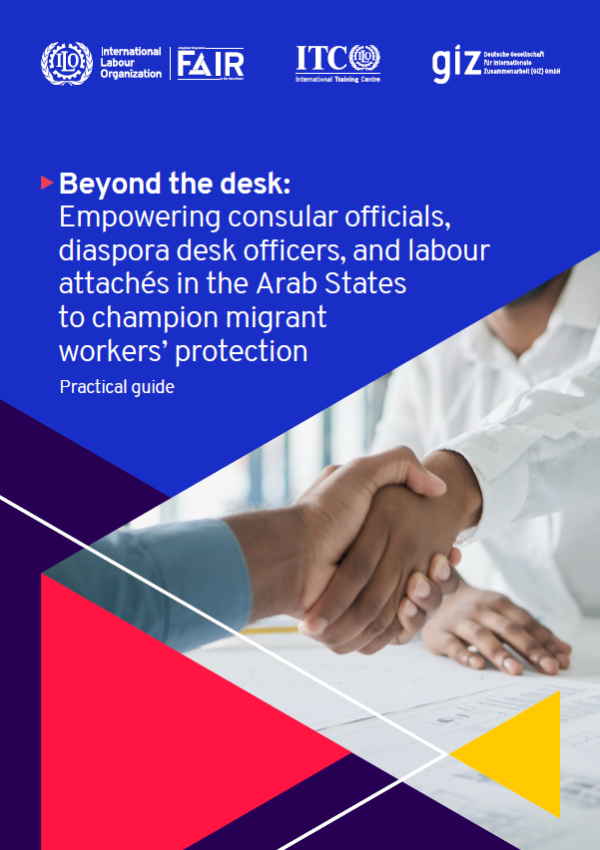
Empowering consular officials, diaspora desk officers, and labour attachés in the Arab States to champion migrant workers’ protection
Beyond the Desk: Empowering Consular Officials, Diaspora Desk Officers, and Labour Attachés in the Arab States to Champion Migrant Workers’ Protection is a practical guide developed within the framework of the Ghana component of the International Labour Organization (ILO) Integrated Programme on Fair Recruitment (FAIR II). FAIR, a global programme established in 2015 to support the implementation of the ILO Fair Recruitment Initiative Strategy, promotes fair recruitment practices in selected countries of origin and destination and across key labour migration corridors.
In its current phase, implemented with the support of GIZ, FAIR II seeks to strengthen stakeholder ownership and facilitate the replication and scaling up of promising practices in migration corridors where partners are committed to improving recruitment systems and outcomes. This guide has been developed specifically to support Ghanaian consular officials, labour attachés, and diaspora desk officers posted in the Arab States in protecting the rights of migrant workers in contexts shaped by Kafala and other sponsorship-based systems, while promoting respect for the Fundamental Principles and Rights at Work (FPRWs).
While grounded in the experiences and institutional context of the Ghana–Arab States labour migration corridor, the approaches, tools, and guidance presented in this publication address challenges common to many countries of origin in the region. As such, the guide is intended not only as a resource for Ghana but also as a reference that can be adapted, expanded, and applied by other countries seeking to strengthen the capacity of their diplomatic and consular missions to support and protect migrant workers abroad. The work undertaken under the Ghana corridor reflects the four pillars of the ILO Fair Recruitment Initiative Strategy by strengthening knowledge and policy guidance on recruitment processes, supporting improvements in laws, policies and enforcement mechanisms, promoting fair business practices, and enhancing migrant workers’ access to reliable information and services throughout the recruitment process.
Designed for use in day-to-day mission practice, briefings, training programmes, and coordinated case management with partners in countries of origin and destination, this guide aims to support informed and practical decision-making while reinforcing a consistent and rights-based approach to migrant worker protection. It is hoped that the experiences and lessons generated through its use will contribute to stronger institutional cooperation, enhanced capacity-building efforts, and continuous improvements to recruitment and employment systems across the region, ultimately making labour migration safer, fairer, and more firmly grounded in dignity and human rights.
You can also access the online version of the guide.
Type of document :
Country/Region : , ,
Year of publication :
Theme : ,
Fair Recruitment and Bilateral Labour Migration Agreements workshop for ECOWAS
|6th July 2026 Time : 9:00am - 5:00pm
|Region/Country :
Theme : ,
BRMM Countries Anchor Labour Migration Progress through the Fourth Labour Migration Advisory Group meeting in Juba
Posted at March 2nd 2026 12:00 AM | Updated as of March 2nd 2026 12:00 AM
Region/Country : ,
|Themes : ,
East and Horn of Africa Countries Strengthen Labour Migration Governance through Learning Visit to the Philippines
Posted at February 24th 2026 12:00 AM | Updated as of February 24th 2026 12:00 AM
Region/Country : ,
|Themes :
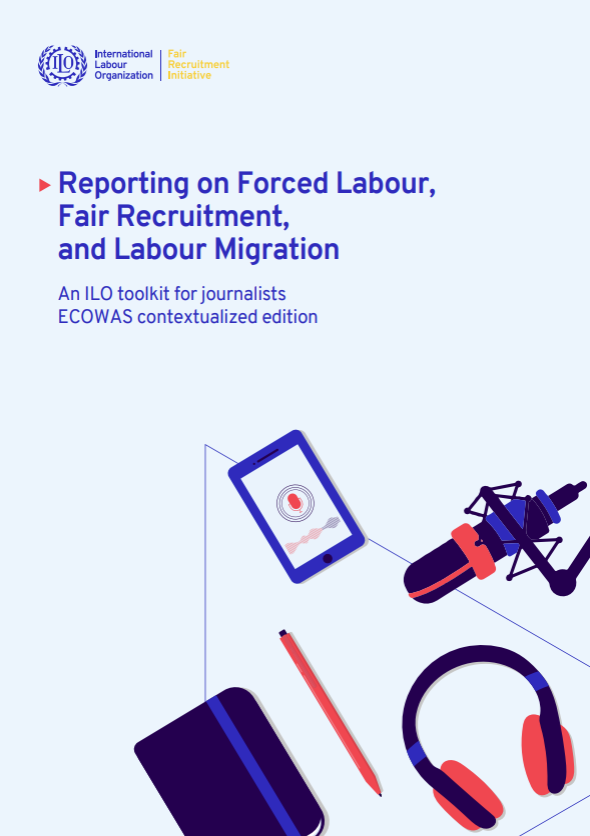
Reporting on Forced Labour, Fair Recruitment, and Labour Migration. An ILO toolkit for journalists. ECOWAS contextualized edition.
This toolkit provides practical guidance for journalists reporting on forced labour, fair recruitment, and labour migration in the ECOWAS region. It aims to support more accurate, balanced, and evidence-based media coverage, helping to counter misinformation, challenge harmful narratives, and highlight the socio-economic contributions of migrant workers.
Developed by the International Labour Organization (ILO), it was produced with contributions from media professionals, international organizations, and regional experts, and draws on lessons learned from previous media engagement initiatives. It provides both conceptual explanations and practical tools, including reporting guidelines, ethical considerations, and real-world examples to support journalists in navigating complex migration-related topics.
The publication was developed within the framework of the Integrated Programme on Fair Recruitment (FAIR III), the Support to Free Movement of Persons and Migration in West Africa (FMM West Africa II), and the Action for Improving Labour Migration Governance in Nigeria (ACTION). It reflects field-based experience and regional priorities, ensuring its relevance for stakeholders across West Africa. It ultimately contributes to strengthening informed public discourse, improving migration governance, and advancing decent work for migrant workers.
Type of document :
Country/Region :
Year of publication :
Theme : , , ,