
Lessons Learned Part 3: Policy and programme responses to unfree labour in destination countries for migrant women workers
This document describes the lessons learned by the Work in Freedom programme on policy and programme responses to unfree labour in destination countries for migrant women workers. This compilation was preceded by an earlier edition of Lessons Learned in October 2021 on recruitment of migrant workers, and another one in April 2021, on outreach to migrant women in areas of origin. It documents the lessons learned by the Work in Freedom Programme regarding policy and programme responses to unfree labour in destination countries for migrant women workers.
Type of document :
Country/Region : ,
Year of publication :
Theme : , ,
Policy brief on anti-trafficking laws, policies and practices
Donors, Governments, international organizations, unions, employers and other civil actors often seek solutions to prevent human trafficking. This is a list of the ten most common misconceptions among policy makers, related facts and recommended laws, policies and practices drawing on the experience of the Work in Freedom Programme.
Type of document :
Country/Region :
Year of publication :
Theme : , , ,
Policy brief on policies related to migrants and unemployment in times of crisis
The purpose of this policy brief is to explain influence of misperceptions during times of economic crisis, on public discourse on migration and employment and recommend laws, policies and practices to overcome these misperceptions.
During times of economic crisis, public discourse on migration and employment tends to be influenced by several misperceptions. This is a list of the 10 most common misperceptions. This list highlights facts, recommended laws, policies and practices, drawing on the ILO’s Work in Freedom Programme. It was presented at the Kafala Reform Workshop on 11 March 2020 at Beirut, Lebanon by Mr Igor Bosc, CTA, Work in freedom Programme to the Minister of Labour and participants.
Type of document :
Country/Region : , , , ,
Year of publication :
Theme : , ,
Worker Centres from a Fundamental Principles and Rights at Work Lens
The purpose of this paper is to explain how a worker centre can also perform functions that support fundamental principles and rights at work. The paper draws on the experience of the ILO’s Work in Freedom programme in supporting worker centres in South and West Asia.
Worker centres are meant for all types of workers, however they tend to cater primarily to the needs of informal workers and migrant workers and tend to exist and be located in areas where fundamental principles and rights at work, such as non-discrimination, freedom of association and collective bargaining as enshrined in International Labour Organization (ILO) Conventions No. 111, No. 87 and No. 98, are a distant reality for both informal workers and migrant workers.
This paper draws on the experience of the ILO’s Work in Freedom programme in supporting worker centres in South and West Asia. It was presented at the ILO Anniversary Conference “Continuing the Struggle: The International Labour Organization Centenary and the Future of Global Worker Rights” held on 21–22 November 2019 in Washington, DC at a panel titled “Protecting Migrants and Refugees Working in Global Supply Chains: New Directions for the ILO.
Type of document :
Country/Region : , , , ,
Year of publication :
Theme : , , , ,
The Work in Freedom Handbook: A critical glossary of terms relating to freedom and unfreedom in the world of work
The purpose of this critical glossary is to deconstruct some of these commonly used concepts related forced labour, modern slavery and human trafficking in order to flag their blind spots, merits and other characteristics.
Most of us would agree that we should take action against forced labour, modern slavery and human trafficking. The Sustainable Development Goals (SDGs) refer to eradicating forced labour and ending modern slavery and human trafficking (SDG Target 8.7). However, each one of these conceptual constructs implies a different way of seeing the world, a different history of understanding and a very different framework of action.
Type of document :
Country/Region : ,
Year of publication :
Theme : , ,
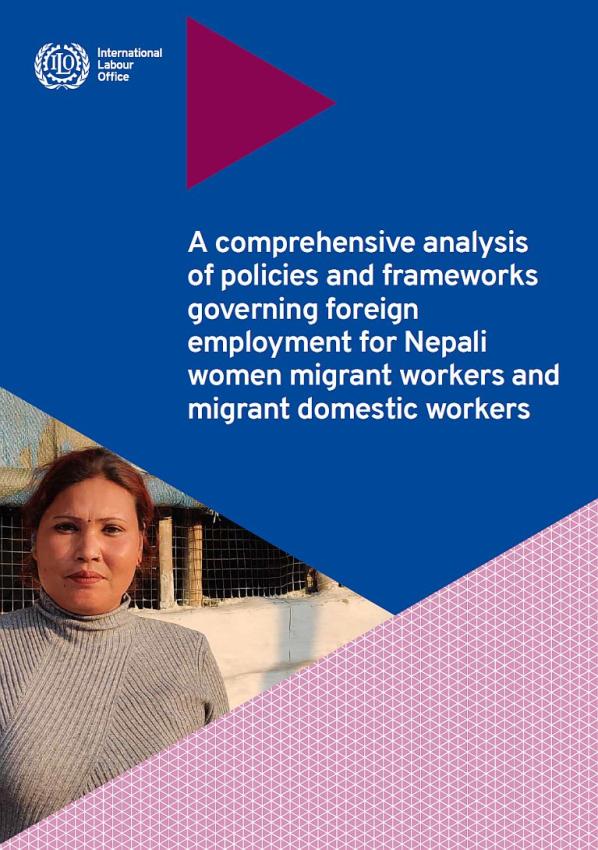
A comprehensive analysis of policies and frameworks governing foreign employment for Nepali women migrant workers and migrant domestic workers. Exploring the migration policymaking process with a specific focus on bans and restrictions on foreign employme
One of the principal causes and risk factors for forced labour and trafficking, identified by past research led by the International Labour Organization (ILO)’s Work in Freedom (WiF) Programme, is restrictive and gender-insensitive migration policies. These include restrictions on movement in the form of bans and restrictions on the departure of women migrant workers and migrant domestic workers from origin countries to seek foreign employment.
In the ILO’s efforts to support the construction of regular migration pathways for women migrant workers and migrant domestic workers which respect their safety, dignity, wellbeing and human and labour rights and which allow them to enrich their own lives, the lives of their families and communities back home, the Work in Freedom Programme of ILO Country Office for Nepal commissioned this present review between February and June 2020 as a comprehensive analysis of legal and policy frameworks governing foreign employment for women migrant workers and migrant domestic workers. This review is an update of ILO’s previous study of migration bans, 'No Easy Exit: Migration Bans Affecting Women from Nepal' published in 2015, but fills an important research gap by focusing on the policy formulation phase itself. The findings identify and characterize the ways in which stakeholders (governmental and otherwise) formulate policy narratives, negotiate policies and regulations and invoke knowledge claims in order to justify regulatory and policy interventions related to women migrant workers, migrant domestic workers and associated thematic areas – including anti-trafficking frameworks, frameworks combatting forced labour, domestic work and more.
Type of document :
Country/Region : , , ,
Year of publication :
Theme : , , , , , , , ,
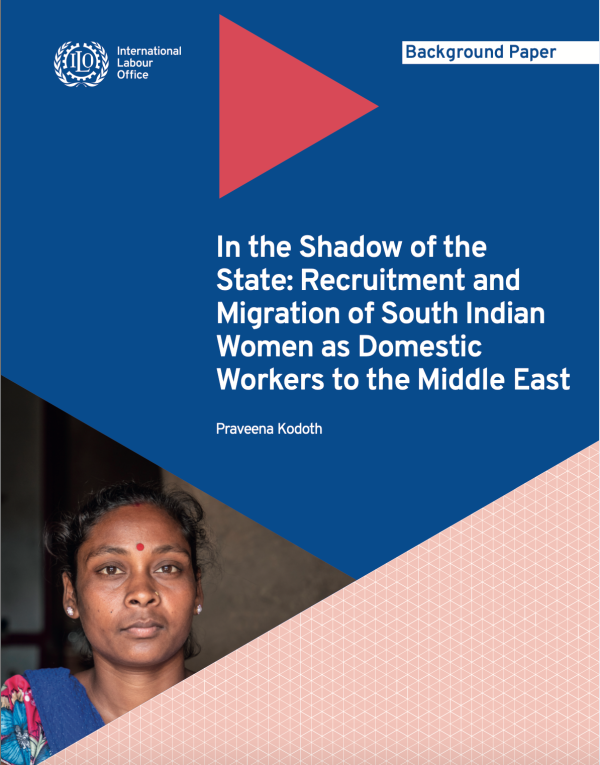
In the Shadow of the State: Recruitment and Migration of South Indian Women as Domestic Workers to the Middle East
This background paper describes and analyses the drivers, pathways and experiences of migrant women from South India as domestic workers in Gulf countries. It is based on primary and secondary research.
Type of document :
Country/Region : , , , ,
Year of publication :
Theme : , , , , ,
Enforcing Migrant Workers’ Labour Rights- Lessons from Trade Unions
Posted at March 7th 2023 12:00 AM | Updated as of March 7th 2023 12:00 AM
Region/Country :
|Themes : , , , , ,
A new ‘One-Stop Shop’ on forced labour: The ILO Forced Labour Observatory
Posted at December 2nd 2022 12:00 AM | Updated as of December 2nd 2022 12:00 AM
Region/Country :
|Themes :
Reducing vulnerability to forced labour and human trafficking of migrant women workers
|26th September 2022 Time : 2:00pm - 4:00pm
|Region/Country :
Theme : , ,