

Digital innovation and fair recruitment: Harnessing technology to protect migrant workers
This webinar will explore how digital innovation can contribute to fair recruitment and strengthen the protection of migrant workers, with practitioners and stakeholders exchanging knowledge and experiences on the opportunities and challenges of using technology in recruitment processes.
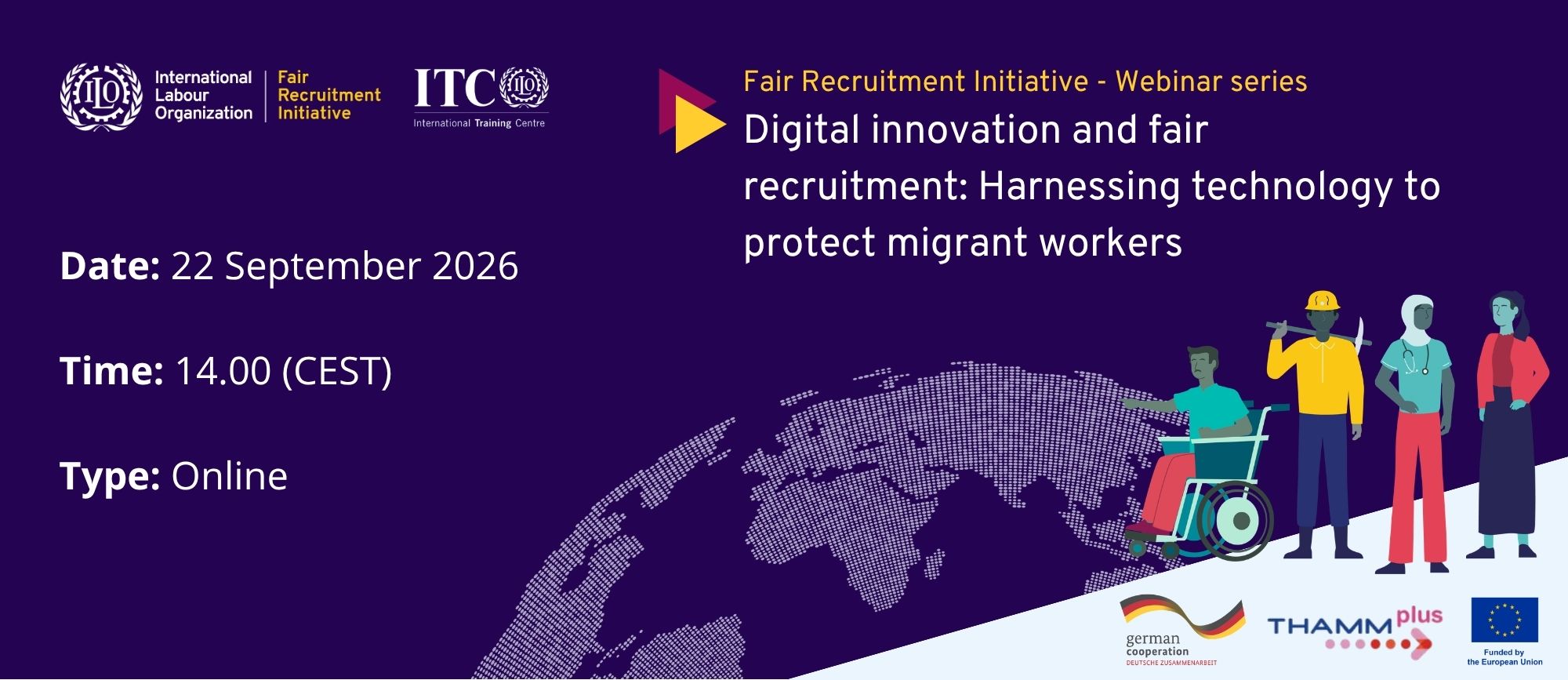
|22nd September 2026 Heure : 2:00pm - 4:00pm CET - Central European Time GMT+1:00
|Région/Pays : Global
Background
Digital technologies are increasingly transforming the way workers and employers connect, including across borders. While digital recruitment tools and platforms can improve access to information, facilitate job matching and increase transparency, they can also create new risks for migrant workers, including misleading job offers, fraudulent recruitment practices, data protection concerns and limited access to information and remedies. Ensuring that technological innovation supports, rather than undermines, fair recruitment principles is therefore increasingly important.
During this webinar, experts will examine how technology and digital innovation can be harnessed to support fairer and more transparent recruitment processes and better protect migrant workers. It will provide an opportunity to discuss emerging practices, opportunities and challenges related to digital recruitment, while considering how different stakeholders can contribute to ensuring that technological solutions are aligned with workers' rights and fair recruitment principles.
The discussion will also encourage knowledge exchange among practitioners and stakeholders, highlighting practical approaches and lessons learned that can help make digital recruitment processes safer, more transparent and rights-based.
Please register here.
The event is organised in collaboration with the ITCILO and supported by the Fair Recruitment Forward project, funded by the Deutsche Gesellschaft für Internationale Zusammenarbeit (GIZ), and the THAMM+ programme, funded by the European Union.