
New EU–ILO Action Launched to Strengthen Labour Migration Governance in Ethiopia
Posted at March 2nd 2026 12:00 AM | Updated as of March 2nd 2026 12:00 AM
Region/Country : Ethiopia
|Themes : Labour migration
A new four-year European Union–funded ILO programme will reinforce Ethiopia’s labour migration governance through stronger institutions, better data systems and improved protection for migrant workers. Launched at a high-level tripartite meeting in Addis Ababa, the initiative brings together government, social partners and development partners to address irregular migration, skills mismatches and coordination gaps. The Action aims to build nationally owned systems that promote safe, regular and orderly labour migration while supporting employment and poverty reduction goals.
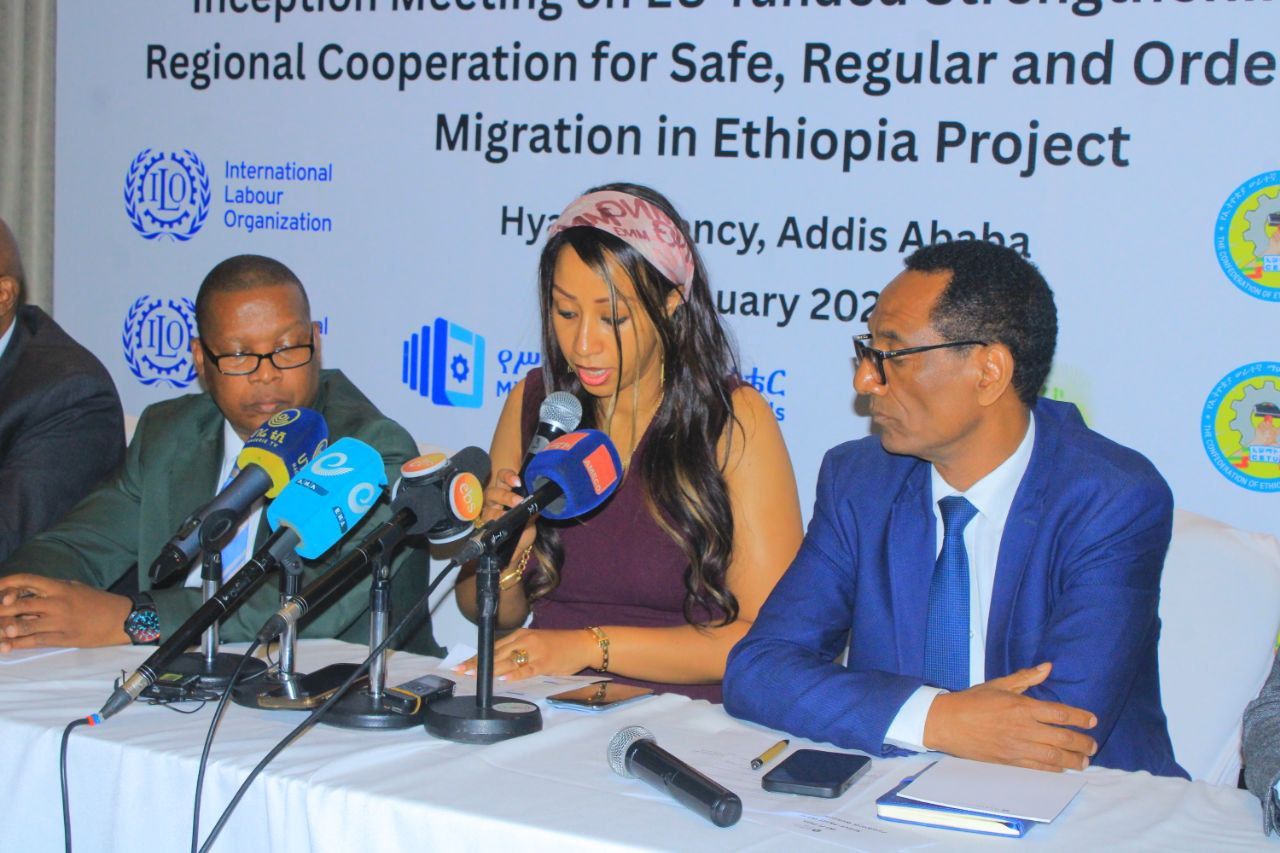
On 30 January 2026, a High-Level tripartite meeting officially launched the four-year European Union–funded Action “Strengthening Inter-Regional Cooperation for Safe, Regular and Orderly Labour Migration in Ethiopia” in Addis Ababa. The inception meeting, officially opened by Khumbula Ndaba, ILO Country Director, convened senior representatives from federal and regional government institutions, social partners, private sector actors, civil society, academia, development partners, and media.
Ethiopia remains a major country of origin, transit, and destination for migration in the Horn of Africa. Labour migration is driven by demographic pressures, youth unemployment, regional disparities, and demand for Ethiopian workers in Gulf States and other destinations. While migration offers opportunities for remittances, skills development, and poverty reduction, irregular migration persists at significant levels, exposing Ethiopia migrant workers, particularly women, to exploitation and protection risks. Despite legislative reforms, including amendments to the Overseas Employment Proclamation and expansion of bilateral labour migration agreements, governance challenges persist. These include skills mismatches with destination labour markets, fragmented federal–regional coordination, weak enforcement of recruitment standards, gaps in migrant protection systems, and limited integration of labour migration data.
To help address these challenges, the action will strengthen the capacity of Ethiopian institutions to improve labour migration governance and protection of migrant workers and ultimately support national goals to alleviate poverty and create sustainable employment opportunities for the youth, while promoting safe, regular, and orderly labour migration.
The inception meeting adopted a structured high-level policy dialogue format, combining formal opening statements, technical presentations, and moderated plenary discussions. High-level statements were delivered by the ILO, representatives of the European Union Delegation, Confederation of Ethiopian Trade Unions (CETU), Confederation of Ethiopian Employers’ Associations (CEEA), and Ministry of Foreign Affairs (MoFA).
Technical sessions included a presentation by Mr. Berhanu Aleka, MoLS E-LMIS Project Manager on labour migration trends, governance structures, and data system strengthening efforts. This was followed by a detailed presentation by the ILO Chief Technical Adviser for the Project, Ms. Aida Awel, outlining overview of the Action’s design, expected results and intervention areas including labour migration data systems, skills development and recognition, recruitment governance, and protection services across the migration cycle.The plenary discussion generated substantive reflections on governance arrangements, corridor prioritisation, irregular migration challenges, bilateral labour agreements, consular protection gaps, and the need for clear institutional roles.
The meeting resulted in a shared understanding of the Action’s objectives, scope, and theory of change. Participants validated priority thematic areas, including strengthening data-driven planning, enhancing skills portability, reinforcing fair recruitment oversight, and improving coordination across federal and regional institutions. Moreover, they agreed that the next phase will prioritise finalisation of the detailed implementation plan, operationalisation of governance structures, and regular coordination and progress review meetings. The Ministry of Labour and Skills reaffirmed its leadership role, while the European Union and the ILO reiterated their commitment to sustained partnership. The inception meeting concluded with a collective commitment to advancing safe, regular, and orderly labour migration in Ethiopia.