
ILO and Jordanian trade unions strengthen their partnership to advance migrant workers' rights
Posted at July 6th 2026 12:00 AM | Updated as of July 6th 2026 12:00 AM
Region/Country : Jordan, Arab States
|Themes : Labour migration, Fair recruitment
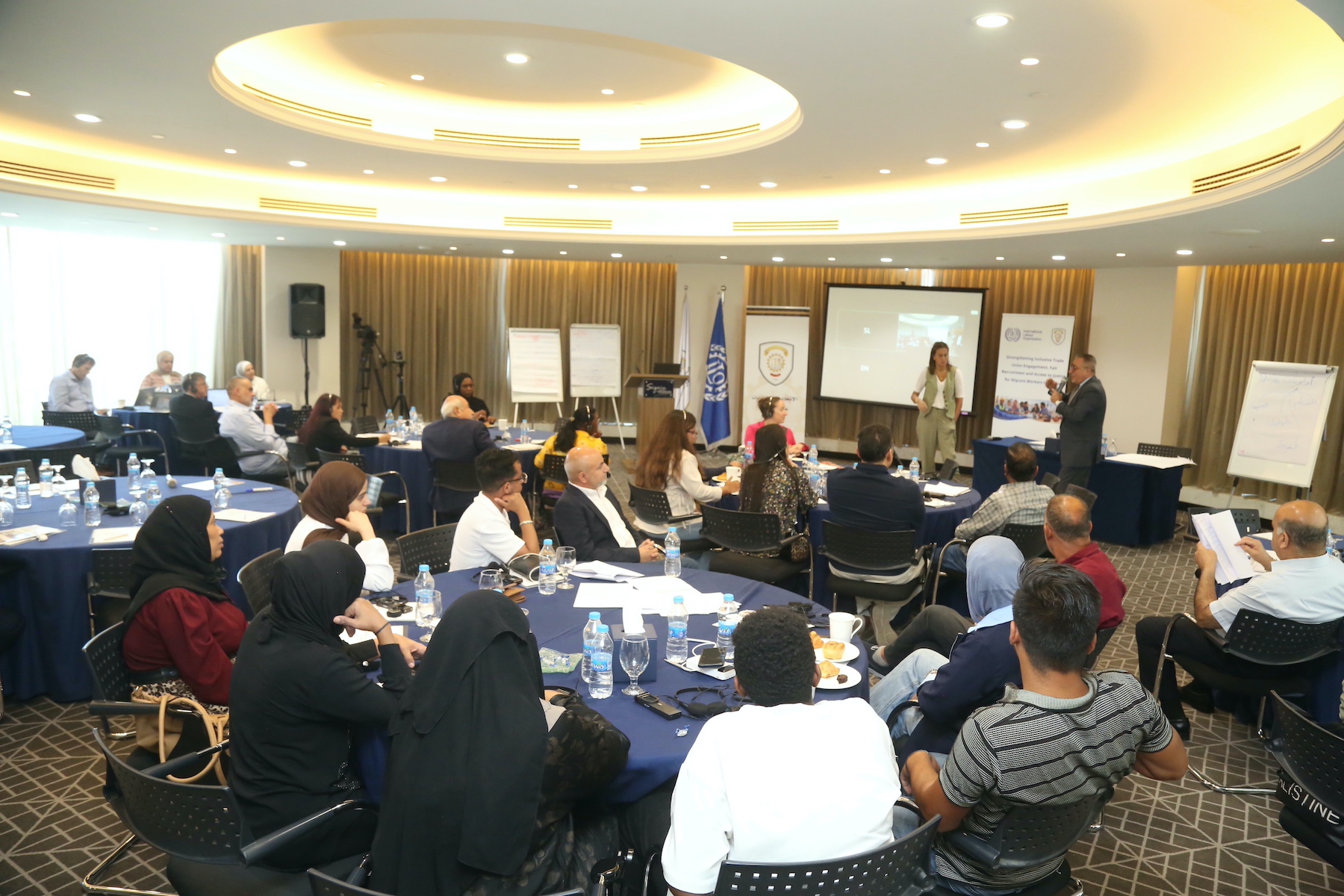
Amman, Jordan (ILO News) – The International Labour Organization (ILO) and the General Federation of Jordanian Trade Unions (GFJTU) convened a three-day strategic workshop in Amman to deepen their partnership in promoting migrant workers' rights and strengthening their representation within Jordan's trade union movement. The workshop forms part of the ILO's continued support for the GFJTU's institutional reform agenda, aimed at promoting fair recruitment, improving access to justice, expanding trade union organizing, and enhancing the meaningful participation of migrant workers in trade union structures.
Jordan relies on a significant migrant workforce across key sectors. Despite their vital contribution to Jordan's economy, many migrant workers continue to face significant challenges, including abusive recruitment practices, inadequate working conditions, barriers to accessing justice, and limited opportunities to organize and exercise their trade union rights through representation and collective bargaining. Strengthening trade union representation is therefore essential to ensuring that migrant workers can effectively claim and exercise their rights.
Against this backdrop, the workshop supported the implementation of the GFJTU's reform strategy by reinforcing its capacity to organize, represent, and defend the rights and interests of migrant workers. It brought together the leadership of the GFJTU, representatives of its newly established Migrant Workers Unit, sectoral trade unions from sectors employing large numbers of migrant workers, including garment manufacturing, construction, agriculture and services, as well as representatives of the newly established Domestic Workers Committee. The diversity of participants reflected the GFJTU's commitment to extending trade union representation to all workers, regardless of nationality or migration status.
During the first two days, participants examined the major challenges migrant workers continue to face throughout the recruitment and employment cycle, considering both cross-cutting issues and sector-specific realities. Discussions focused on identifying concrete trade union responses to these challenges, including strengthening organizing strategies, improving outreach to migrant workers, increasing membership, building trust, and creating pathways for migrant workers to actively participate in trade union decision-making and leadership. A dedicated session explored the gender dimensions of labour migration, highlighting challenges faced by women migrant workers, particularly in the domestic work sector. Participants discussed barriers related to gender inequality, discrimination, access to representation and protection, and identified priorities for developing trade union policies and services that respond to the specific needs of women migrant workers across sectors.
The third day focused on improving migrant workers' access to justice. Representatives of the Ministry of Labour, the Jordan Chamber of Industry, civil society organizations, and United Nations agencies joined trade union representatives and the ILO to discuss the current landscape of labour dispute prevention and resolution and grievance-handling mechanisms in Jordan. The discussions highlighted the important role of trade unions in supporting workers to seek redress, providing advice and representation, and strengthening referral mechanisms. Participants explored the barriers migrant workers face in accessing both judicial and non-judicial remedies and identified opportunities to strengthen grievance-handling, referral pathways and institutional coordination to ensure that migrant workers can effectively access remedies and enjoy equal protection under labour law.
Throughout the workshop, discussions were anchored in the ongoing reform process of the GFJTU, including efforts to operationalize its Migrant Workers Unit and institutionalize policies, services and organizing approaches that promote the inclusion and representation of migrant workers across the trade union movement. The workshop also contributed to identifying priority actions for the development of the GFJTU’s policy on migrant workers and supporting action plan, reinforcing the federation's role as a representative voice for all workers and advancing decent work, equality, social justice and inclusive social dialogue in Jordan.
The workshop was organized by the ILO with financial support from the Fair Recruitment Forward project, funded by the Deutsche Gesellschaft für Internationale Zusammenarbeit (GIZ), and the FAIRWAY programme, funded by the Swiss Agency for Development and Cooperation (SDC).
Contacts
Alix Nasri, Labour Migration Branch (MIGRANT), nasri@ilo.org
Ryszard Cholewinski, Regional Office for Arab States (ROAS) cholewinski@ilo.org
Mustapha Said, Bureau for Workers' Activities (ACTRAV), said@ilo.org