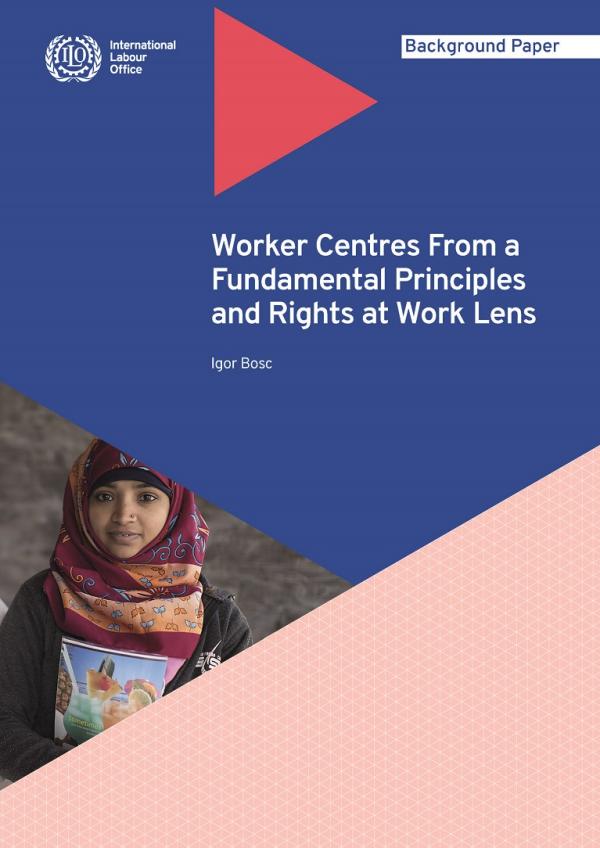
Worker Centres from a Fundamental Principles and Rights at Work Lens
The purpose of this paper is to explain how a worker centre can also perform functions that support fundamental principles and rights at work. The paper draws on the experience of the ILO’s Work in Freedom programme in supporting worker centres in South and West Asia.
Worker centres are meant for all types of workers, however they tend to cater primarily to the needs of informal workers and migrant workers and tend to exist and be located in areas where fundamental principles and rights at work, such as non-discrimination, freedom of association and collective bargaining as enshrined in International Labour Organization (ILO) Conventions No. 111, No. 87 and No. 98, are a distant reality for both informal workers and migrant workers.
This paper draws on the experience of the ILO’s Work in Freedom programme in supporting worker centres in South and West Asia. It was presented at the ILO Anniversary Conference “Continuing the Struggle: The International Labour Organization Centenary and the Future of Global Worker Rights” held on 21–22 November 2019 in Washington, DC at a panel titled “Protecting Migrants and Refugees Working in Global Supply Chains: New Directions for the ILO.
Type of document :
Country/Region : , , , ,
Year of publication :
Theme : , , , ,
Frequently asked questions by migrant garment workers in qualified industrial zones
This handbook is a compilation of the frequently asked questions posed by migrant workers in qualified industrial zones (QIZs) on their employment conditions, employer–employee relationships, and their rights and entitlements while working in Jordan as migrant garment workers.
Type of document :
Country/Region : , ,
Year of publication :
Theme : , ,
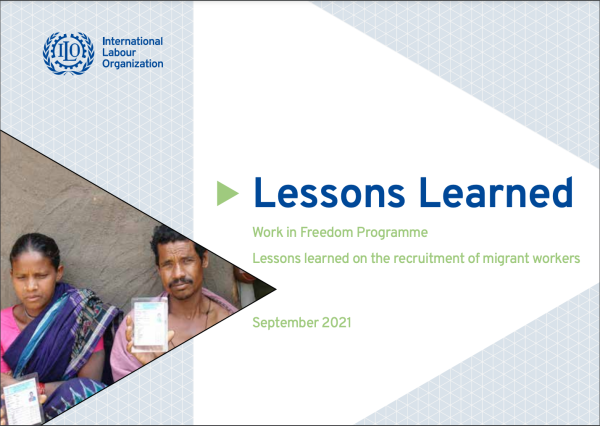
Lessons Learned Part 2: Recruitment
This document describes the lessons learned by the Work in Freedom programme on recruitment of migrant workers. This compilation was preceded by an earlier edition of Lessons Learned in October 2017, followed by another one in February 2019. This new edition focuses particularly on recruitment of migrant workers. It lists and describes the nature of both conventional and non-conventional interventions and reviews some of the assumptions behind the rationale for these interventions.
Type of document :
Country/Region : , , , , , ,
Year of publication :
Theme : , ,
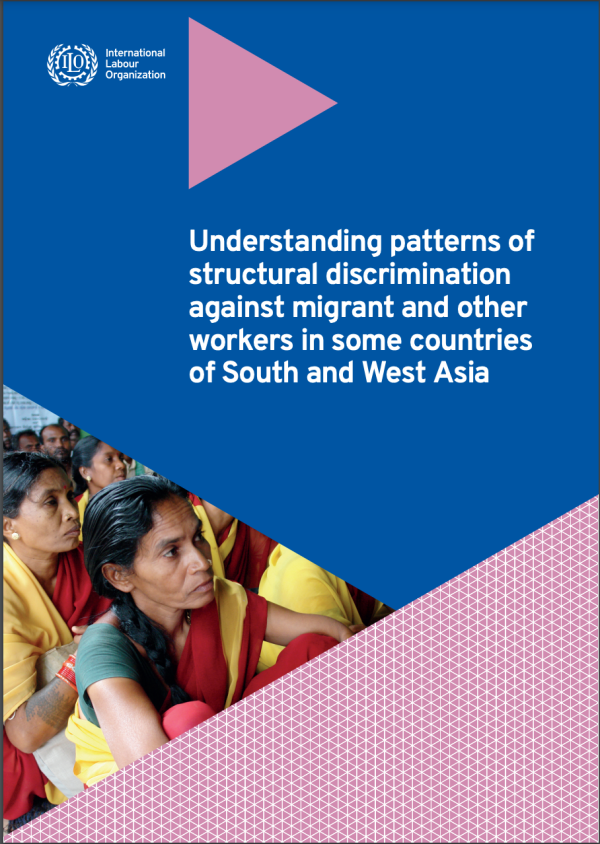
Understanding patterns of structural discrimination against migrant and other workers in some countries of South and West Asia
This background paper reviews the literature that sheds light on the structural patterns of discrimination against migrant workers in some countries of South and West Asia. It also articulates recommendations that would help officials in UN agencies, international organizations, constituents and other civil society individuals and groups, while referring to the existing evidence of structural discrimination to support the application of international labour standards.
While references to international non-discrimination standards do occasionally surface in public discourses, this paper reviews evidence that discrimination in the world of work is not only characterized by socially deviant cases of discriminatory abuse, as reported in the media, but is rather intrinsic to the way various market economies and political systems are structured. This is manifested by indicators of privilege for some and indicators of deprivation for those at the bottom of the social and political hierarchies, including the interaction between both.
Type of document :
Country/Region : , , , , , , ,
Year of publication :
Theme : , , , , ,
The Work in Freedom Handbook: A critical glossary of terms relating to freedom and unfreedom in the world of work
The purpose of this critical glossary is to deconstruct some of these commonly used concepts related forced labour, modern slavery and human trafficking in order to flag their blind spots, merits and other characteristics.
Most of us would agree that we should take action against forced labour, modern slavery and human trafficking. The Sustainable Development Goals (SDGs) refer to eradicating forced labour and ending modern slavery and human trafficking (SDG Target 8.7). However, each one of these conceptual constructs implies a different way of seeing the world, a different history of understanding and a very different framework of action.
Type of document :
Country/Region : ,
Year of publication :
Theme : , ,
The Integrated Gender Responsiveness-One Roof Services Office (LTSA-MRC) in Cirebon receives Indonesian Migrant Worker Award from the Ministry of Manpower
Posted at December 21st 2021 12:00 AM | Updated as of December 21st 2021 12:00 AM
Region/Country : ,
|Themes : , , , , ,
Establishing synergies and strategies to better protect women migrant workers
Posted at September 18th 2018 12:00 AM | Updated as of September 18th 2018 12:00 AM
Region/Country :
|Themes : , , , ,
Building stronger solidarity and partnership for safer and fairer labour migration under the new normal
Posted at December 23rd 2020 12:00 AM | Updated as of December 23rd 2020 12:00 AM
Region/Country :
|Themes : , ,
Experiences of ASEAN migrant workers during COVID-19: Rights at work, migration and quarantine during the pandemic, and re-migration plans
The COVID-19 pandemic is disrupting labour migration throughout the ASEAN region and globally. In 2019 there were an estimated 10 million international migrants in ASEAN, of whom nearly 50 per cent were women. The ILO undertook a rapid assessment survey, interviewing ASEAN migrant workers from end-March to end-April 2020 about how COVID-19 has impacted them. This brief summarizes the responses of the 309 women and men migrant workers who participated in the survey.
Type of document :
Country/Region : , , , , , , , , , ,
Year of publication :
Theme : , , ,
Gender sensitivity in labour migration agreements and MOUs
Global Action Programme on Migrant Domestic Workers - Research series in support of June 2016 project report release.
Type of document :
Country/Region :
Year of publication :
Theme : , , , , ,