African Migrant Resource Centres strengthen cooperation to support migrant workers
Posted at May 25th 2026 12:00 AM | Updated as of May 25th 2026 12:00 AM
Region/Country :
|Themes : ,
International labour standards and migrant workers’ rights: A Guide for policymakers and practitioners
This ILO guide brings together the international labour standards most relevant to the protection of migrant workers’ rights. It offers practical guidance on how these standards apply throughout the migration experience, supporting rights-based labour migration and decent work for all.
Migrant workers make essential contributions to labour markets, economic growth and social protection systems worldwide. When labour migration is well governed, it supports productivity, skills development and inclusive and sustainable development in countries of origin, transit and destination. International labour standards provide a robust framework to ensure these contributions are fully realised, grounded in dignity, equality and decent work for all.
This Guide presents an overview of the international labour standards most relevant to migrant workers from the perspective of their rights throughout the migration experience. It brings together, in a single resource, the key principles, rights and protections set out in relevant ILO standards and explains how they apply at different stages of labour migration. The Guide covers fundamental principles and rights at work, fair recruitment, equality of opportunity and treatment, working conditions, social protection, and access to justice.
Drawing on the guidance from ILO supervisory bodies and illustrative examples from diverse regional and national context, the Guide serves as a practical reference for policymakers, social partners and practitioners. It supports the design and implementation of rights-based labour migration policies that promote decent work, fair migration and inclusive labour markets.
Type of document :
Country/Region :
Year of publication :
Theme : ,
South Sudan Trade Unions Mobilise for Migrant Worker Rights through National Capacity-Building Workshop
Posted at March 2nd 2026 12:00 AM | Updated as of March 2nd 2026 12:00 AM
Region/Country :
|Themes : ,
Reporting on Forced Labour, Fair Recruitment, and Labour Migration. An ILO toolkit for journalists. ECOWAS contextualized edition.
This toolkit provides practical guidance for journalists reporting on forced labour, fair recruitment, and labour migration in the ECOWAS region. It aims to support more accurate, balanced, and evidence-based media coverage, helping to counter misinformation, challenge harmful narratives, and highlight the socio-economic contributions of migrant workers.
Developed by the International Labour Organization (ILO), it was produced with contributions from media professionals, international organizations, and regional experts, and draws on lessons learned from previous media engagement initiatives. It provides both conceptual explanations and practical tools, including reporting guidelines, ethical considerations, and real-world examples to support journalists in navigating complex migration-related topics.
The publication was developed within the framework of the Integrated Programme on Fair Recruitment (FAIR III), the Support to Free Movement of Persons and Migration in West Africa (FMM West Africa II), and the Action for Improving Labour Migration Governance in Nigeria (ACTION). It reflects field-based experience and regional priorities, ensuring its relevance for stakeholders across West Africa. It ultimately contributes to strengthening informed public discourse, improving migration governance, and advancing decent work for migrant workers.
Type of document :
Country/Region :
Year of publication :
Theme : , , ,
Rapid assessment on access to labour justice for migrant workers in Ghana
This study examines how Ghanaian migrant workers access labour justice and seek remedies for employment-related grievances, both in Ghana and in destination countries. Conducted under the ILO’s Integrated Programme for Fair Recruitment (FAIR Phase III) and funded by the Swiss Agency for Development and Cooperation, it is based on mixed methods research, including desk review, key informant interviews with relevant institutions, and focus group discussions with returnee migrants. The study maps existing formal and alternative grievance and dispute resolution mechanisms, assesses their effectiveness, and identifies structural and practical barriers that limit migrant workers’ access to justice.
Against the backdrop of Ghana’s evolving migration landscape, marked by increasing labour migration to the Gulf and Middle East, particularly among women in domestic work, the study analyses the national legal and institutional frameworks aligned with international labour standards. Despite the existence of these mechanisms, migrant workers often face significant obstacles, including limited awareness of their rights, high financial costs, bureaucratic delays, weak enforcement, and fear of retaliation or deportation. These challenges are especially acute for women, who encounter gender-specific risks such as restricted mobility, social stigma, and heightened vulnerability to exploitation and abuse.
The study further highlights the role of trade unions, civil society organisations, and recruitment agencies in supporting migrant workers, while underscoring persistent gaps in coordination, resourcing, enforcement, and outreach. It concludes that improving access to labour justice requires stronger law enforcement, expanded legal aid and digital complaint mechanisms, enhanced pre-departure information and training, and closer cross-border cooperation between Ghana and destination countries to ensure safe and effective access to remedies throughout the migration cycle.
Type of document :
Country/Region :
Year of publication :
Theme : , , ,
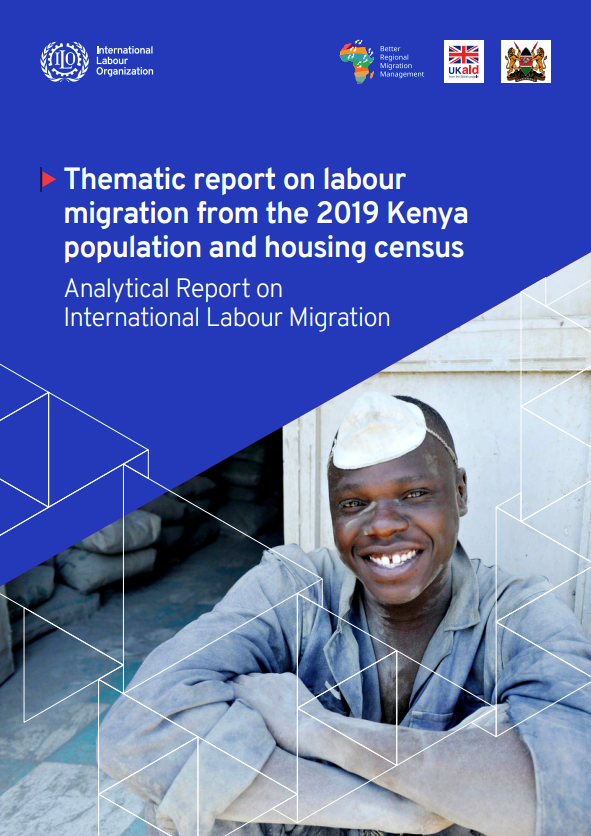
Thematic report on labour migration from the 2019 Kenya population and housing census Analytical Report on International Labour Migration
The "Thematic Report on Labour Migration from the 2019 Kenya Population and Housing Census," published by the International Labour Organization (ILO) in collaboration with the Kenya National Bureau of Statistics, serves as Kenya's first comprehensive monograph specifically dedicated to international labour migration. Guided by the 20th International Conference of Labour Statisticians, the report analyzes the scale and patterns of workforce movement to support evidence-based policymaking aligned with national aspirations like Vision 2030 and global frameworks such as the Sustainable Development Goals. By providing disaggregated data on migrant characteristics and employment conditions, it seeks to improve migration governance and maximize the developmental benefits of labour mobility within the East and Horn of Africa region. Findings from the 2019 census indicate that Kenya hosted 419,135 immigrants, with 225,197 identified as international labour migrants, the majority of whom originate from East African Community states like Uganda and Tanzania. Regarding emigration, approximately 327,000 Kenyans left the country in the 15 years prior to the census, with 56 per cent moving for employment-related reasons, primarily to the Arabian Gulf, which also serves as a major source of remittances for 1.2 per cent of Kenyan households. While the foreign-born working-age population exhibits a labour force participation rate of 67.9 per cent, the report notes significant gender disparities and highlights the need for continued improvement in tracking migration-related indicators through stronger inter-agency coordination.
Type of document :
Country/Region :
Year of publication :
Theme : ,
Ghana Advances Fair Recruitment Agenda with the Validation of two Key Reports
Posted at December 11th 2025 12:00 AM | Updated as of December 11th 2025 12:00 AM
Region/Country :
|Themes : , ,
Ghana: Country profile and national roadmap: Analysis of recruitment policy, processes and practices, an action plan for fair recruitment
This Recruitment Country Profile is a study on the legal and regulatory framework governing the recruitment and placement of migrant workers in Ghana that provides a comprehensive analysis of the existing national system, identifies gaps, and offers concrete recommendations to strengthen governance of recruitment based on workers’ rights.
Supported by the Integrated Programme on Fair Recruitment – Phase III (FAIR III), it represents an analytical and participatory effort to strengthen the governance of recruitment of migrant workers in Ghana. Grounded in the ILO’s General Principles and Operational Guidelines for Fair Recruitment and relevant international labour standards, it identifies key normative and institutional gaps in the current framework and proposes measures to align national legislation and policies with international standards. Through documentary analysis and tripartite stakeholder consultations, the study serves as a practical and strategic tool for guiding public policy, strengthening coordination among actors, and advancing fair recruitment.
The second part of the document is showcasing a National Roadmap to promote fair recruitment in Ghana, an effort to enhance labour migration governance and ensure the protection of migrant workers’ rights. Developed through a consultative process involving key stakeholders, the roadmap provides a strategic framework for fostering fair and transparent recruitment practices in Ghana.
It aims to align Ghana's national policies and practices with international labour standards and human rights relevant to fair recruitment, ensuring that migrant workers, whether in Ghana or abroad, are protected from exploitation, abuse, and discrimination and can enjoy decent and productive employment. In addition to more robust regulatory oversight, it supports the integration of fair business practices among employers, ensures a strong role for workers’ organizations, and engages media professionals to raise public awareness on labour migration and recruitment issues.
Type of document :
Country/Region :
Year of publication :
Theme : , ,
Awareness Workshops on Migrant Workers’ Rights Launched in Somalia
Posted at December 4th 2025 12:00 AM | Updated as of December 4th 2025 12:00 AM
Region/Country :
|Themes : , ,
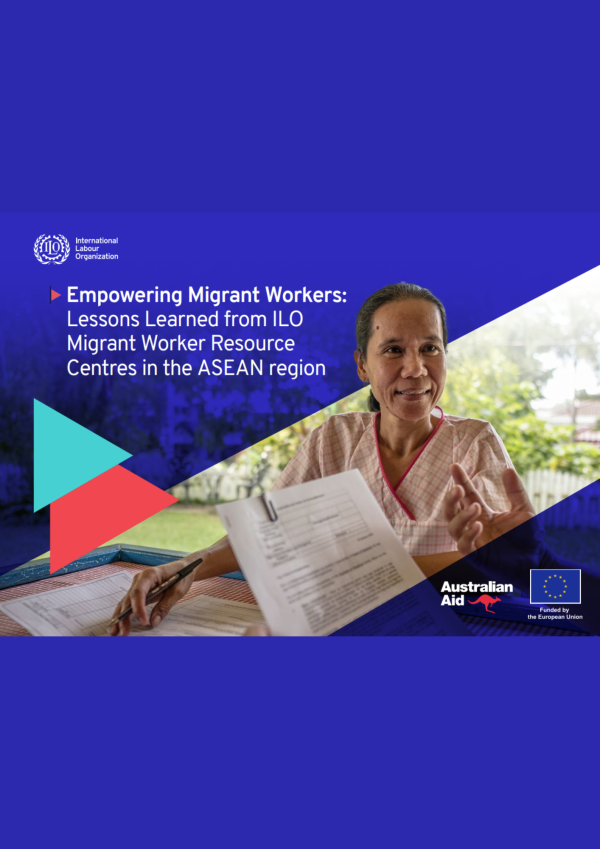
Empowering Migrant Workers: Lessons Learned from ILO Migrant Worker Resource Centres in the ASEAN region
This publication draws on the experience of the International Labour Organisation’s support for Migrant Worker Resource Centres (MRCs) in the ASEAN region. It highlights how these centres improve access to information, legal aid, and social protection for migrant workers while promoting safe migration, decent work, and long-term sustainability through strong community partnerships and rights-based approaches.
MRCs offer a wide range of services, including counselling, psychosocial support, legal aid, information, outreach, pre-migration and post-return training, and targeted programmes for migrant women, people with disabilities, fishers, seafood processors and domestic workers. Their role in organizing migrant workers into networks and trade unions has helped build a collective voice and empower migrant workers.
The publication offers practical guidance to governments, trade unions and civil society organizations on improving delivery of information and services to support safe migration for decent work. It advocates for further investments in community-based support structures that prioritize the labour rights and empowerment of migrant workers. It was commissioned by the ILO's TRIANGLE in ASEAN, Safe and Fair/ PROTECT and Ship to Shore Rights programmes.
Type of document :
Country/Region :
Year of publication :
Theme :